Description
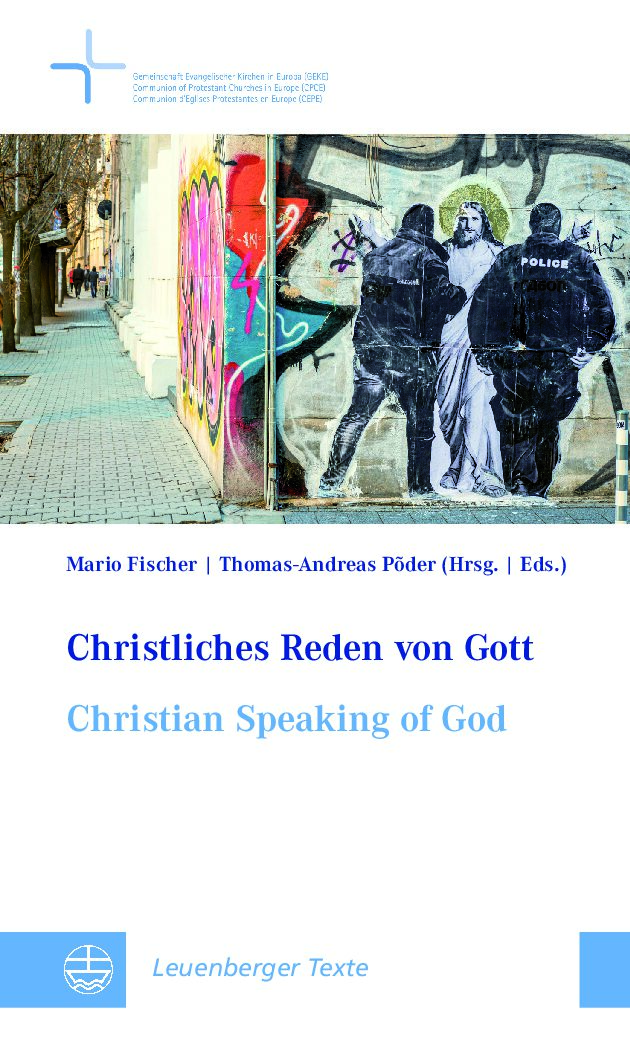
God can be found – or not – in many different forms: whether in public discourse as a critical position on extreme developments (or vice versa), in art as the epitome of beauty or as a ridiculous relic of the past. God divides and God unites, and God is appropriated.
Against this backdrop, the Community of Protestant Churches in Europe (CPCE) has been engaged in a study process over the past few years to address the question of how to speak about God in a comprehensible, stimulating and encouraging way.
The 9th General Assembly of the CPCE in 2024 adopted the document and characterised it as a groundbreaking contribution to understanding how we talk about God today.
After first setting out the conditions for discourse about God in European Protestantism, it outlines the basic features of a Trinitarian image of God and God’s work, which particularly address modern criticism of the concept of God’s omnipotence. Christian discourse about God includes speaking to God, with God and from God in worship and prayer, which is considered in separate chapters. Finally, different social contexts are identified in which Christian discourse about God must prove itself.
Gott findet sich wieder – oder auch nicht – in mannigfacher Präsenz: sei es im öffentlichen Diskurs als kritische Position zu extremen Entwicklungen (oder umgekehrt), in der Kunst als Inbegriff der Schönheit bzw. als lächerliches Relikt der Vergangenheit. Gott spaltet und Gott eint und Gott wird vereinnahmt.
Vor diesem Hintergrund hat sich die Gemeinschaft Evangelischer Kirchen in Europa (GEKE) in den vergangenen Jahren in einem Studienprozess mit der Frage beschäftigt, wie man von Gott in einer verständlichen, anregenden und ermutigenden Art und Weise reden kann.
Die 9. Vollversammlung der GEKE 2024 hat das Dokument angenommen und es als wegweisenden Beitrag zur Verständigung über das gegenwärtige Reden von Gott charakterisiert.
Nachdem es zunächst die Bedingungen für den Diskurs über Gott im europäischen Protestantismus darstellt, werden Grundzüge eines trinitarischen Gottesbildes und des Wirkens Gottes entworfen, die sich besonders der modernen Kritik des Konzeptes der Allmacht Gottes stellen. Christliches Reden von Gott schließt das Reden zu Gott, mit Gott und von Gott her in Gottesdienst und Gebet ein, was in eigenen Kapiteln bedacht wird. Abschließend werden unterschiedliche soziale Kontexte aufgezeigt, in denen sich christliches Reden von Gott zu bewähren hat.