At a consultation in Oslo from 23 to 25 April 2026, the Communion of Protestant Churches in Europe (CPCE), together with the Church of Norway, reflected on the continuing relevance of the 2012 CPCE document Ministry, Ordination, Episkopé in light of changing patterns of ministry across the churches. The consultation affirmed the document’s ongoing value, identified areas requiring further common reflection, and underlined its importance for church order, theological formation, and ecumenical relations.
Oslo Consultation with broad Ecumenical and International Participation reconsiders Ministry in the CPCE
From 23 to 25 April 2026, the Communion of Protestant Churches in Europe (CPCE), in cooperation with the Church of Norway, held a consultation in Oslo on Rethinking Ministry in the CPCE: Responding to Diversification through Ministry, Ordination, Episkopé (MOE, Leuenberg Documents 13).
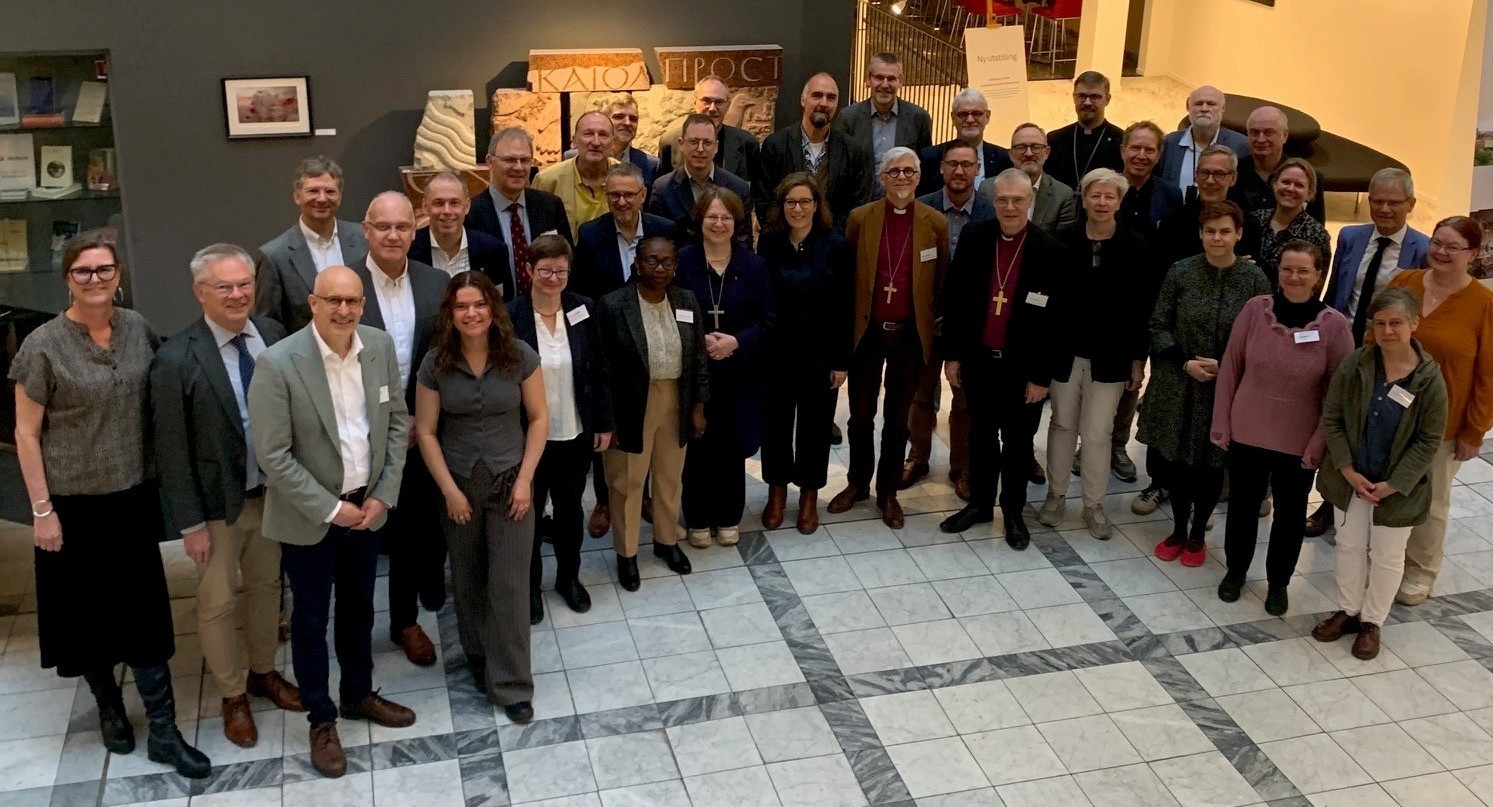
The consultation brought together 38 participants from 17 countries and from a wide range of church, linguistic, academic, and ecumenical contexts, including theologians, church leaders, specialists in ministerial formation, persons responsible for ecumenical relations, and representatives of church governing bodies. Among them were CPCE President Bishop Marko Tiitus of the Estonian Evangelical Lutheran Church, CPCE General Secretary Rev. Dr Susanne Schenk, Bishop Dr Matti Repo of the Evangelical Lutheran Church of Finland, Bishop Prof. Dr Cornelia Richter of the Protestant Church of the Augsburg Confession in Austria, Bishop Mag. Ján Hroboň of the Evangelical Church of the Augsburg Confession in Slovakia, and CPCE Council members Rev. Eva Guldanová of the Evangelical Church of the A.C. in Slovakia and Dr Ulrich Rüsen Weinhold of the United Protestant Church of France. The consultation also benefited from Anglican participation as guests, including representatives of the Church of England and the Church of Ireland, which enriched the ecumenical horizon of the discussion.
New Challenges for Ministry and Ordination
The gathering responded to developments that have become increasingly significant in many CPCE churches since the adoption by the CPCE General Assembly in Florence in 2012 of the doctrinal conversation text Ministry, Ordination, Episkopé. The document itself comprises around 40 pages, together with a further 40 pages of resource material. For the consultation, particular attention was given to its central theological Statement (pp. 41–63) and its ten Recommendations (pp. 64–65). Against the background of new patterns of ministry, changing leadership models, increasingly diverse ministerial biographies, and ongoing ecclesial and ethical debates, the consultation asked how ministry, ordination, and episkopé should be understood and further developed today within the framework of unity in reconciled diversity.
Theological Contributions and Comparative Perspectives
The programme combined theological input, comparative case studies, plenary discussion, and structured group work. Rev. Prof. Dr Ulrich Körtner of Austria opened the consultation with a keynote on the hermeneutics of the models of ministry in MOE. Rev. Prof. Dr Harald Hegstad of the Church of Norway then presented the Church of Norway’s reflections on ordination and the ministry of Word and Sacrament in the context of a plurality of ministries. Further contributions from the United Protestant Church in Belgium, the Reformed Church in Hungary, the Evangelical Lutheran Church of Finland, and the Germany Central Conference of the United Methodist Church highlighted developments in other CPCE churches. Bishop Prof. Dr Cornelia Richter of the Protestant Church of the A.C. in Austria contributed an Austrian perspective on ministry and in church leadership. Rev. Prof. Dr Matthias Wüthrich of the Protestant Church in Switzerland reflected on whether and how the model of unity in reconciled diversity should be developed further in view of this diversification. Rev. Alexandra Breukink of the Union of Protestant Churches of Alsace and Lorraine opened the focused discussion on the ten recommendations of MOE, followed by more specific inputs from Assoc. Prof Hilde Marie Øgreid of the United Methodist Church in Norway on the ordination of women and its development since MOE, and from Rev. Canon Dr Maurice Elliott of the Church of Ireland on Do New Biographies Need New Curricula?
Working Groups Shape Common Conclusions
The group work played a key role in the consultation. It was in the working groups that the theological impulses and comparative observations from the plenary sessions were brought into focused common discernment. Participants worked on two central questions: what message the consultation should convey regarding the diversification of ministry, and where, in light of the discussions, the ten recommendations of MOE might need to be revised or complemented. The results were then brought back into plenary and helped shape the consultation’s common conclusions.
MOE Confirmed as a Continuing Resource
A central outcome of the consultation was the shared conviction that the MOE document remains a valid and useful instrument for reflection on ministry, ordination, and episkopé within the CPCE. At the same time, participants identified areas in which changed circumstances call for further concretization and development. These are include:
- the diaconate,
- women’s ordination and leadership,
- inclusion,
- recognition of ministries and ordinations,
- misuse of power,
- the role of catechists and church musicians,
- ministry in political contexts,
- theological education and continuing formation,
- and the contribution of non-ordained persons to church service.
Church Communion and Ecumenism Belong Together
The consultation also underlined that deepening communion among the CPCE churches and contributing to the unity of the wider church are not competing aims. Rather, the discussions made clear that the CPCE’s lived practice of church communion, including the mutual recognition of ministries, has significance not only for the internal life of the Communion itself, but also for its ecumenical witness and credibility in relation to other churches.
Next Steps Toward 2027
As a next step, a small drafting group will prepare a short letter for the CPCE Church Leaders’ Consultation in Wittenberg in 2027. Its task is not to produce a new text independently of the consultation, but to formulate, on the basis of the discussions and results in Oslo, a concise summary of the main insights that emerged: to report on the reception of the MOE document, to affirm its continuing relevance, and to indicate where further work is needed in view of new developments and challenges.
Further possible follow-up steps discussed in Oslo included:
- digital formats for exchange,
- a CPCE map of ministry practices,
- regional discussions,
- and more focused work on ordination and its theological and liturgical dimensions.
MOE as an Enduring Common Reference Point
An important result of the consultation was the common recognition that the document adopted by the CPCE General Assembly in Florence in 2012 deserves continued reception and careful consideration. The consultation concluded that Ministry, Ordination, Episkopé has shown both its continuing elasticity and its ongoing relevance. At the same time, the discussions made clear that new challenges concerning diversity, recognition, episkopé, the interchangeability of ministries, women’s ordination and leadership, and the limits of diversity require further common reflection. In the view of the consultation, Ministry, Ordination, Episkopé remains an important common point of reference for the churches in reflecting on and shaping church order, in contexts of theological education and preparation for ministry, and in ecumenical relations and dialogues. It is a valuable instrument for deepening CPCE church communion, strengthening its contribution to the wider ecumenical movement, and supporting the churches’ common witness and service in Europe.
Thanks to the Church of Norway!
The consultation was organized on behalf of the CPCE by Rev. Dr Stefan Cosoroaba, CPCE Officer for Church Development, and Rev. Prof. Dr Thomas-Andreas Põder, CPCE Secretary for Theology and Ecumenical Dialogue. The CPCE is deeply grateful to the Church of Norway for its generous cooperation and hospitality in hosting the consultation in Oslo. Special thanks are due to Beate Fagerli, Senior Advisor for Ecumenism in the Church of Norway, for her highly committed local support and excellent coordination, which contributed greatly to the smooth and welcoming course of the meeting.