Numerous children are growing up without parents in eastern (and to some extent also southern) Europe. The international media have dubbed these children “Euro-orphans”. Studies have revealed that more than half of the children in the Republic of Moldova, for example, spend periods of their childhood in the absence of their mother or father. NGOs estimate that somewhere between 500,000 and one million children are affected by this plight in member states of the EU such as Romania, Bulgaria and Poland. Caritas talks of up to nine million “Euro-orphans” in Ukraine.
“Euro-orphans” come to experience parental love as regular transfers into a bank account or packages of brand-name clothes and toys received in the post. But they lack the close company of their parents. Skype images are a poor substitute for kisses and cuddles. It’s no exaggeration to describe this experience as traumatising for these children, as it deprives them of the affection that sets them up for later in life. The risk also exists that being “abandoned” this way makes children susceptible to exploitation (sexual abuse, etc.), insufficient medical care and depression. Their education is also often neglected.
The CPCE’s aid projects
Funding from the Italian cultural tax (“Otto-per-Mille”) awarded to the Protestant Waldensian Church is being channelled into helping the CPCE support representative church projects focusing on “Euro-orphans” in eight European countries. The Gustav Adolf Foundation is co-organising this project work.
Insights into networking between the projects
Two online meetings of project managers in November 2021 and May 2022 revealed a patchwork of approaches to this complex subject. The participants all agreed that the projects need to address not only the children and young people, but their entire family networks. Furthermore, “Euro-orphans” present a challenge not only for the parents’ home countries, or where these children live, but also for the parents’ destination countries. In the latter, efforts need to be made to create humane working and living conditions and to dovetail the provision of aid more closely across borders. The exodus of the parents leaves a hole not only in the children’s lives, but also on the labour market in their home country, the latter being filled by workers from poorer countries, who in turn leave their own families behind. How can this vicious circle be broken?
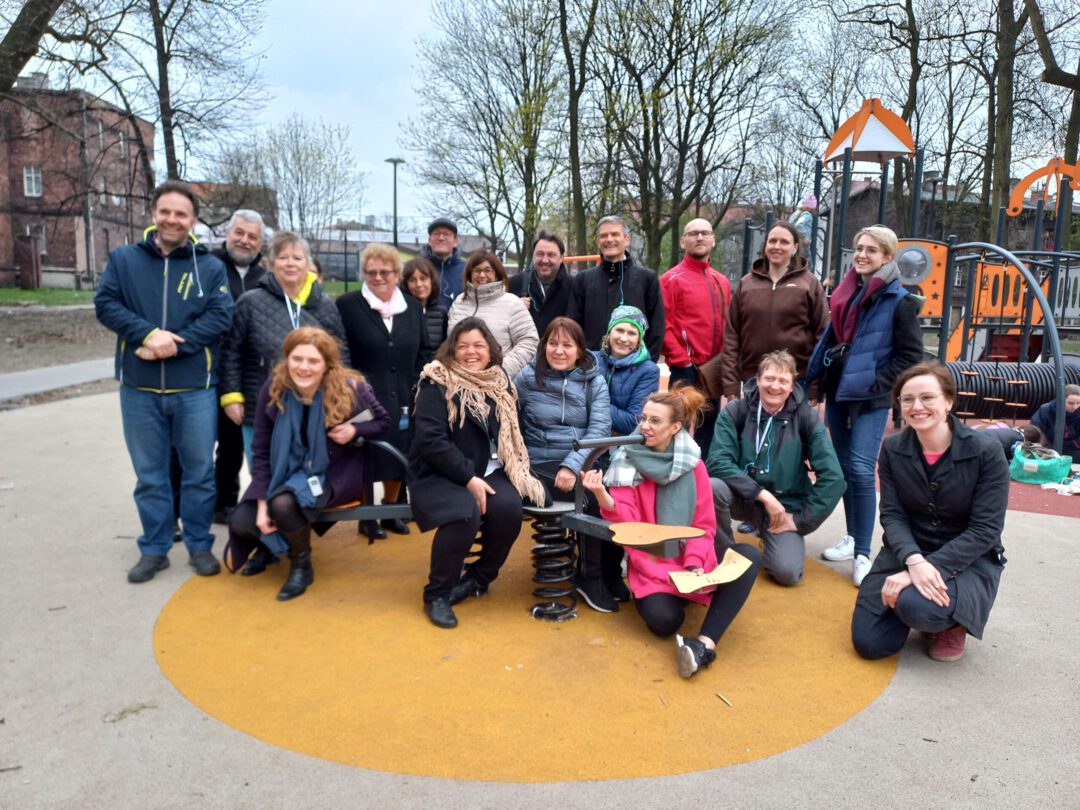
In the meanwhile the Russian attack on Ukraine changed a lot in Eastern Europe. This time many Ukrainian families were torn apart when the mothers and children left the country. Diaconal projects reacted and included this target group into their work. From 17 to 19 April 2023 a network meeting of project managers took place in Katowice.