
“Miracles are happening here right now—and I’d like to share that with you,” says Endre Iszlai of the Reformed Church in Hungary. At the World Café (which in this case is more like a “Café Europa”) he presents his work, and his enthusiasm is contagious. Iszlai is a pastor in Debrecen, along with his wife, who is also a pastor. Hungary’s second-largest city is growing rapidly; companies are setting up shop, new residential areas are springing up, and many young families are moving in.
The Iszlais’ congregation therefore decided to participate in a call for proposals from their church and seize the opportunity to build and operate a church-run preschool. With the help of EU funding, a daycare center was added as well. This means a lot of administrative work for the pastor, but he says it’s worth it. Not only do the children in the preschool learn about the Christian faith through songs, prayers, and Bible stories, but the parents whose children attend the preschool are often searching for meaning and spirituality as well. “And they come to us at the church to find it,” Iszlai says happily.
However, to reach out to newcomers, the congregation needs openness and appropriate programs. In addition to worship services for children and families, the Iszlais rely on innovative ideas—for example, an event for married couples around Valentine’s Day. The children are cared for during this time. But the most important thing, according to Iszlai, is that they are approachable, accessible, and help create a new image of the church. He and his wife are present in the day-to-day life of the kindergarten, celebrate the festivities with the children, and even sit around the campfire—this way, they get a sense of what matters to the families.
And indeed, his congregation is changing as a result. “We have more baptisms, more weddings, and more people are coming to worship services,” Iszlai explains. “And this gives us the opportunity to share the Gospel in different ways.”
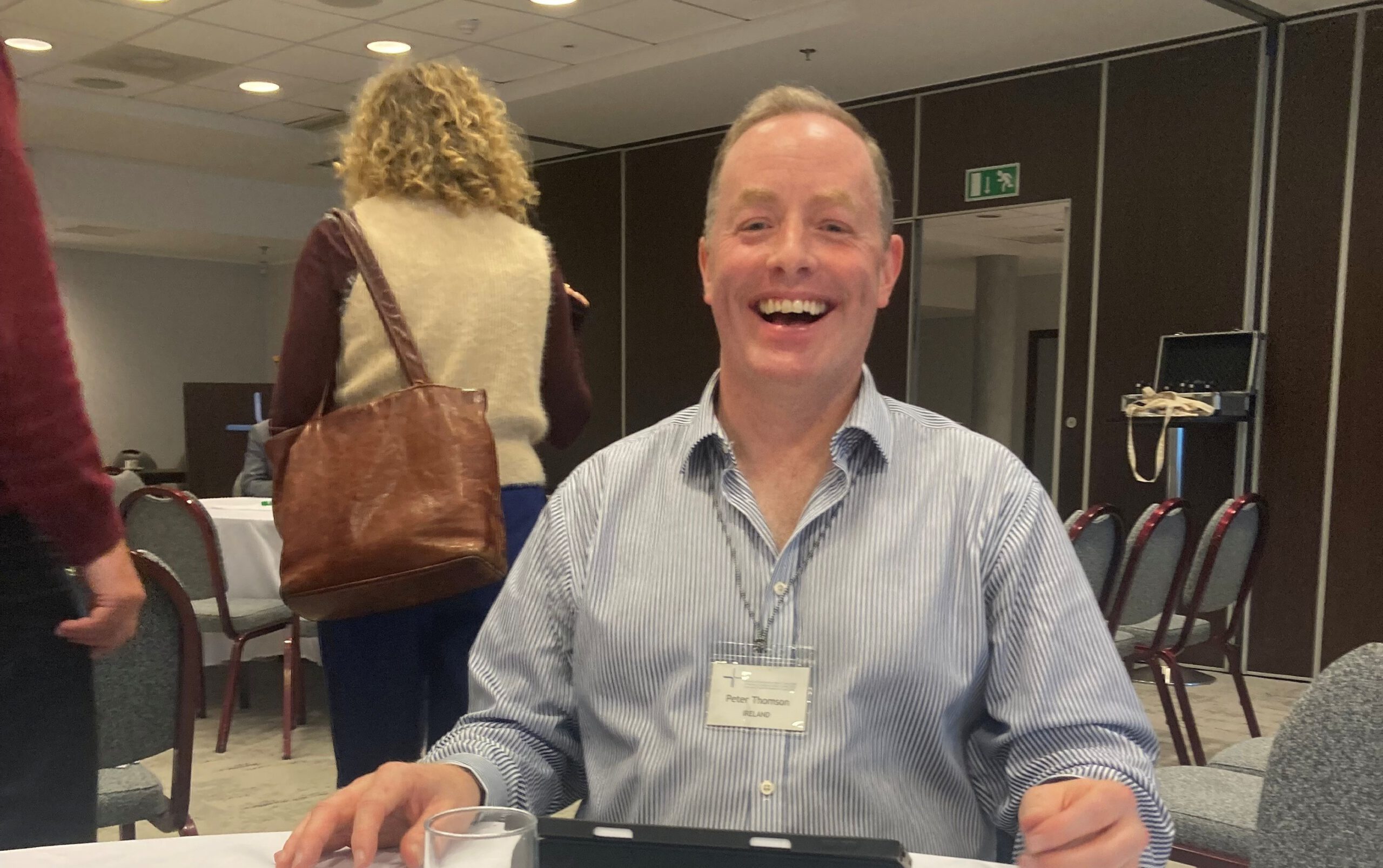
The journey to the next table in the conference room is a long one—it takes us from Hungary all the way to the westernmost part of Europe, to Ireland. There, Peter A. Thompson serves as archdeacon of the Diocese of Armagh in Northern Ireland. His church, the Church of Ireland, relies on so-called “Pioneer Ministries” to reach people who would otherwise have no contact with the church.
Thompson points to his church’s long and venerable tradition before going on to describe a long series of surprising new initiatives. Take Ross Barrett, for example. The trained chef calls his pioneer project “Cook, Serve, Pray.” And that’s exactly what he does. He goes into neighborhoods considered dangerous, where poverty is visible and drugs are part of everyday life. There, Barrett sets up his mobile kitchen and cooks good, nutritious food that he shares with anyone who stops by. Sometimes people ask him why he does this. And then he tells them about his faith. At one point, someone asked him to pray with them. Others want to read the Bible with him. In the beginning, the police offered him protection. Now they take a break when he’s there because during that time, the violence also takes a break.
Archdeacon Thompson, sitting in the conference room in Riga, barely catches his breath before he reports on the next ideas that have emerged in Ireland. Take, for example, the idea from Valerie Raitt, who lives on the west coast of Ireland. She incorporates the magnificent natural scenery there, which attracts hundreds of thousands of vacationers, into her work. For them, Raitt opens a window into the spirituality of the Celtic monks who once retreated here into solitude, and is developing a pilgrimage concept for the region.
All of these projects, Thompson explains, are designed to be long-term—and are intended to eventually become self-sustaining or receive financial support from local communities once the Church withdraws its funding after five years. But no one can yet foresee exactly what will happen in all the places where the pioneers are working today. For Thompson, only one thing is certain: they are doing the right thing: “There is a world outside the church doors that is searching for hope and meaning. And we must not wait for people to come to us. instead, we must go out and share the good news.”