The Communion of Protestant Churches in Europe (CPCE) is advancing a doctrinal conversation on a question that goes to the core of its identity as a communion of churches: what does “doctrinal diversity” mean—and what does it require—within a shared and binding church communion?
CPCE unites Lutheran, Reformed, United and Methodist churches that live in communion with one another. From the outset, CPCE has affirmed that communion can be real and sustained even where doctrinal differences remain. The present doctrinal conversation therefore does not aim at uniformity, nor does it relativise doctrinal questions. Its purpose is to offer theological clarity and practical orientation: under what conditions doctrinal diversity can function as a resource for mutual learning, correction, and a deepened understanding of the gospel—and when it becomes burdensome, exhausting, or even threatens communion.
The work also addresses how doctrinal diversity shapes CPCE’s common life, its ecumenical dialogues, and its public witness in plural societies. The Starting Group intends to develop a single coherent text that builds explicitly on CPCE’s existing theological reflection while also seeking greater clarity regarding the theological status and practical consequences of doctrinal diversity. The report will begin from CPCE’s own language and experience, and will then explore the ambivalence of doctrinal diversity—its constructive as well as its problematic dimensions. Particular attention will be given to how doctrinal diversity is acknowledged and sustained within communion, how it affects ecumenical dialogue, and how it influences the churches’ shared or differentiated witness in society.
Process and timeline
The Starting Group began its work with preparatory online sessions in September and November, followed by an intensive meeting in Vienna on 29–30 January 2026. On 30 January 2026, the group agreed on a clarified theological focus and a renewed working approach. An interim concept paper has now been submitted to the Council/Presidium of CPCE.
During 2026, the group will develop the draft of the doctrinal conversation document through four online meetings, and plans to meet again one year later for a concentrated review of the integrated draft and agreement on the direction of final redaction.
The draft is expected to be submitted to the CPCE Council in April 2028, which will decide on forwarding it to the member churches. In connection with this, CPCE plans an early-2028 consultation of member churches, where the draft will be discussed intensively and guidelines for further editorial work will be agreed. The Starting Group will then be extended into an Editorial Group, tasked with revising the draft and coordinating the next stages of reception.
A revised version is planned to be sent to the member churches for written feedback in June 2029, with responses due by June 2030. After further revisions, the Council is expected to decide at the beginning of 2031 on sending the text to the delegates of the CPCE General Assembly, with final reception and adoption envisaged at the General Assembly in autumn 2031.
Starting Group members
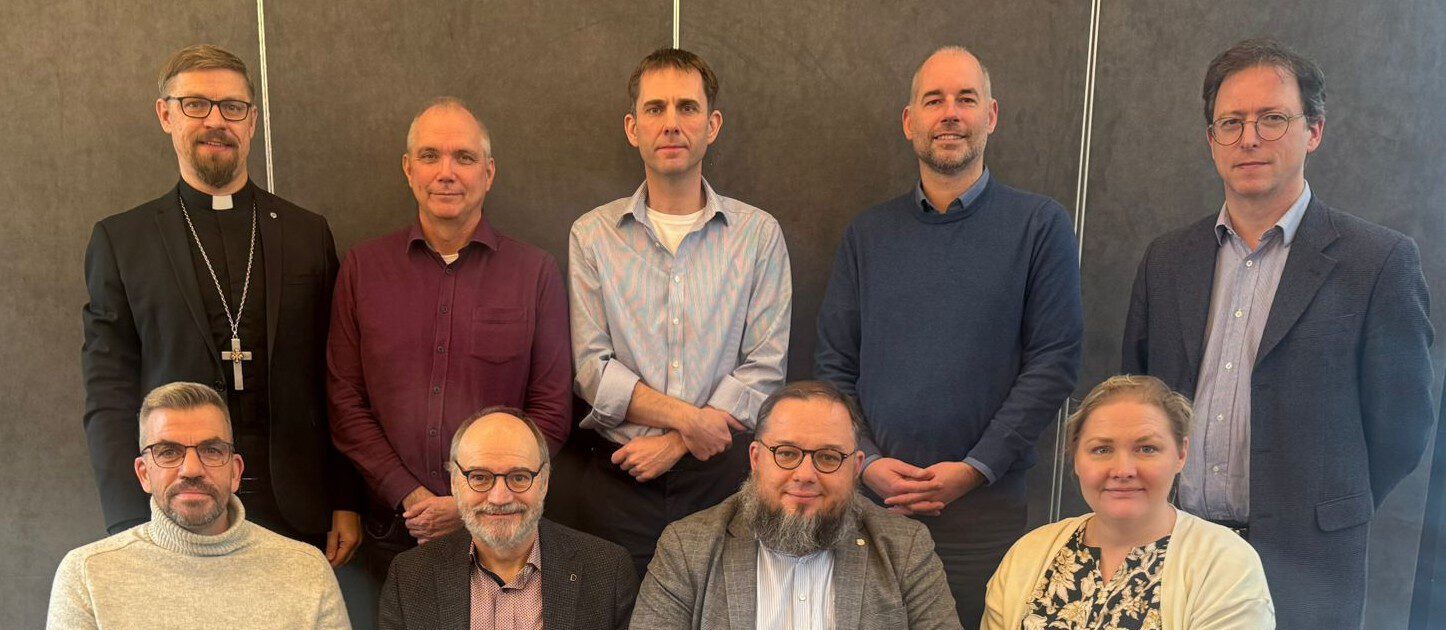
The Starting Group consists of Frédéric Chavel and Paul Nimmo (co-chairs), David Field, Petr Gallus, Szilveszter Füsti-Molnár, Jerzy Sojka, Jennifer Wasmuth, and Heidi Zitting, as well as Georg Plasger (liaison to the CPCE Council) and Thomas-Andreas Põder (Study Secretary).