Teach and Learn
The church communion continues to work on deepening, examining and updating its common understanding of the Gospel, addresses contemporary ecclesiastical and ethical challenges and works towards a common European Protestant religious education.
Theology
Systematic and practical theology are important areas of CPCE work. Here you can find detailed information about the current work processes.
Doctrinal conversations within the church communion
Doctrinal conversations are a central part of the CPCE's theological work, involving the joint drafting of texts for broad participation and eventual adoption by the General Assembly. They explore confessionality within a diverse church community, addressing confessional plurality, the reception of historical confessions, and how confessionality can be lived within a differentiated consensus.
Mixed Economy
The CPCE and its work are, to some extent, a barometer of ecclesial developments in Europe. It takes up the issues that are of current and existential importance in its member churches. A major cross-cutting theme today is the experienced change within both society and the churches. These respond to it in various ways. One possible response is the development of “Mixed Economy” projects that foster spiritual growth outside the traditional structures of the churches. But change also occurs among members, in leadership, in faith attitudes, and not least in financial matters. The key question is how all this current transformation can be not only described but also theologically grounded and oriented. A small group, led by Council member and Munich bishop Thomas Prieto Peral, is working on this question. Its task is to listen to reports of change in regional contexts and to ask what patterns of a Theology of Change can be identified behind them.
Ministry, Ordination And Episkopé
At its 2012 General Assembly in Florence, the CPCE summed up the common position of its member churches regarding ministry, ordination, and leadership responsibility in the document “Ministry, Ordination, and Episkopé.” Empirical descriptions and theological principles were brought together in this text. In recent years, however, many European regions have seen developments driven often less by theology than by social, financial, and personnel factors. The visible “tip of the iceberg” includes the introduction of new ministries and alternative paths to the ministry of proclamation, an increase in late-vocation candidates, broad discussions on diversity and identity, as well as new leadership tasks arising from structural reorganization.
All these changes are now to be examined in a consultation of experts in order to make the connection with the document more visible. Despite all the pragmatic challenges, the claim remains that the fundamental lines of Protestant theology must not be blurred. Church leaders will engage with the document in a later phase (2027).
Empowering Ordained Women
Although most Protestant churches have ordained female pastors, the proportion of women in church leadership positions is too low. ‘Empowering Ordained Women’ is a multi-level initiative to promote women, including a networking meeting in spring 2027.
Ethics

On an ethical level, the CPCE is currently focusing on safeguarding measures and what it means to be church in times of uncertainty. With the Democracy Compass, it is working on the development of interactive democracy materials.
Safeguarding measures for the CPCE member churches
The CPCE wants to raise awareness for sexual abuse in its member churches. The General Assembly 2024 called for a “work process to share experiences with safeguarding measures to evaluate them and to promote good practice”.
Sexual abuse is always to be seen in its specific context of power and social circumstances. These contexts as well as legal frameworks differ in various European countries. The process aims to provide attentive and safe spaces for people in governing bodies and specific committees of churches in order to hear and learn from each other.
Democracy Compass
The Protestant Church is observing political developments and the shift away from democratic values with concern. It is developing interactive democracy materials for its member churches.
Being Church together in times of uncertainty
The Advisory Board on Ethical Issues began work on the topic ‘Being Church together in times of uncertainty’ in 2026. More details to follow in coming months.
Education

One European Curriculum for Protestant Religious Education
Over the past centuries, Protestantism has not only conveyed Christian and democratic values in Europe, but has also played a decisive role in shaping education. In keeping with this tradition, the Communion of Protestant Churches in Europe (CPCE) is committed to continuing its educational work. The Advisory Board on Education is the only pan-European Protestant institution to develop a curriculum for Protestant religious education in European schools and a framework with clear criteria for its delivery. In doing so, it is important to take into account the diversity of Protestantism in Eastern, Western, Northern and Southern Europe.
The conditions are difficult. Education is increasingly threatened by austerity measures, and in a secular society, a general Christian education can no longer be taken for granted. Churches, congregations and, above all, individual educators are therefore called upon to share the joy of the Christian message and the strengthening experience of faith, and to be well equipped with a sound education (of the heart). For education is a theological obligation.
Democracy Cards
You can order a set of Democracy Cards for democratic eduation in our book shop.
XII Words: Listen, Tell, Share - Flashcards for Discussion on Church a – CPCE Book Shop
Publications from the
CPCE Council Period 2018-2024
Sexuality- Gender- Family- Marriage

The study document, which sparked discussion within the CPCE member churches, brings together various theological perspectives and the latest findings from biology and the social sciences on issues of homosexuality, gender binarity and gender transition, with a chapter also devoted to the dark side of sexuality – abuse and sexualised violence.
Practice and Theology of the Lord's Supper
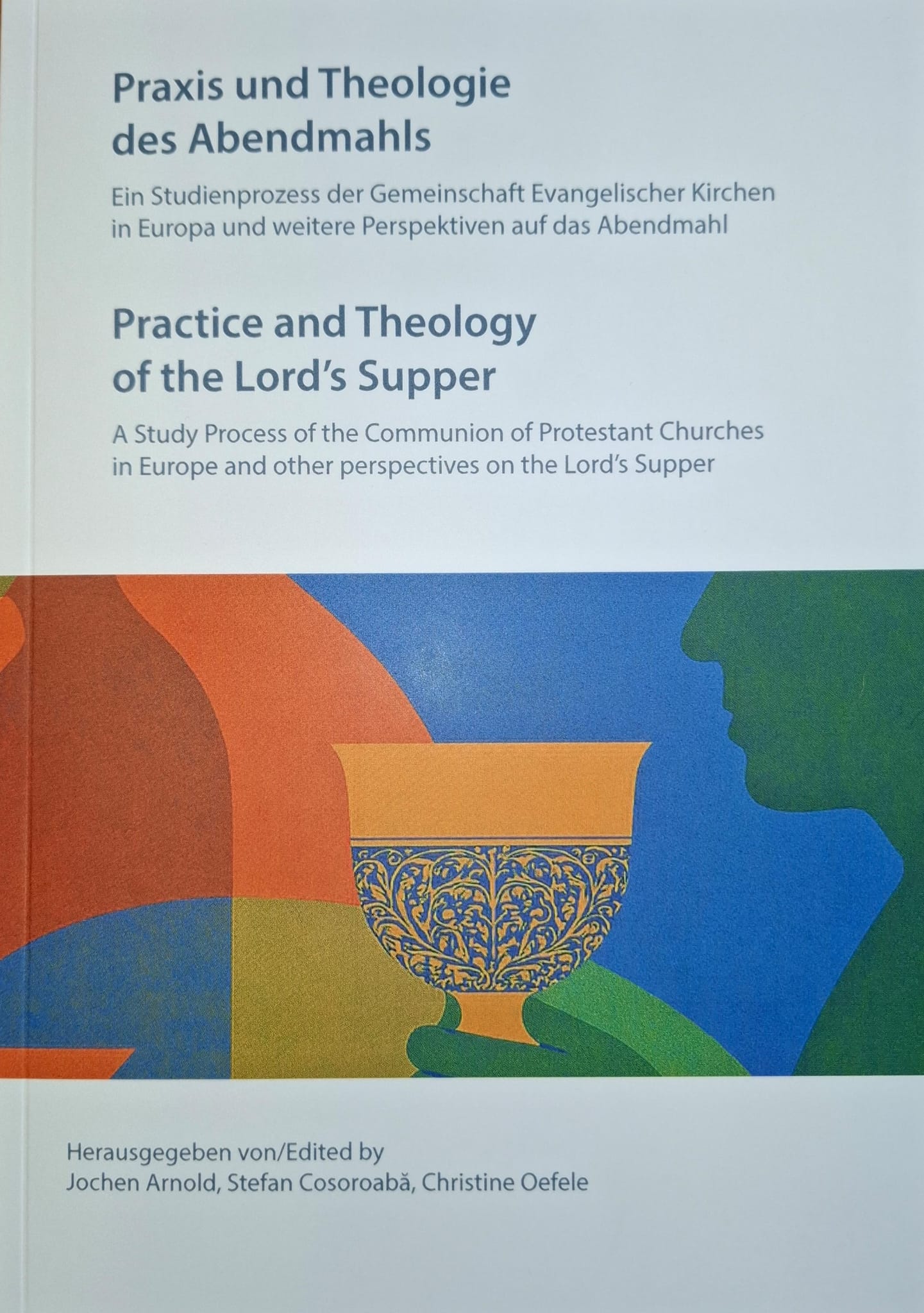
How open should the church be? Should it open its doors (be welcoming) or should it actively invite people in (to invite)? How inviting can a communion service be to occasional visitors who are unfamiliar with the procedures? How does the communion community change when children are included? What music is appropriate? How should the church look in order to be inviting?
Over the past five years, the CPCE has been addressing these topical issues, which pastors throughout Europe are confronted with. Numerous experts from Iceland to Sicily and from the Baltic States to the USA were involved. The document is explicitly intended as a theological discussion paper for practical application. Fifty years after the Leuenberg Agreement, this volume explores how the community of Protestant churches in Europe celebrates communion and how it should be celebrated in the future.
Christian Speaking of God

God can be found – or not – in many different forms: whether in public discourse as a critical position on extreme developments (or vice versa), in art as the epitome of beauty or as a ridiculous relic of the past. God divides and God unites, and God is appropriated.
Against this backdrop, the Community of Protestant Churches in Europe (CPCE) has been engaged in a study process over the past few years, examining the question of how to speak about God in a comprehensible, stimulating and encouraging way.
The 9th General Assembly of the CPCE in 2024 adopted the document and characterised it as a groundbreaking contribution to understanding how we speak about God today.