“I’m glad that my son can simply say at school that he went to church on Sunday – and not be looked at strangely for it.” Maarja Krussmets is standing in the break room at Kaarli School in Tallinn, speaking so animatedly that her corkscrew curls bounce. She is not only the mother of a pupil, but also an English teacher at the church-run school. And she is clearly enthusiastic about the school’s approach.
Not only are religious studies taught here, Christian festivals celebrated and Christian values imparted, but the educational approach is also unique: the school is situated right in the city centre and makes the most of this. “We don’t have regular lessons on Wednesdays. All the classes go out and visit a different learning location. The three factors – environment, experience and knowledge – are intended to be part of the education,” says Meelis Holsting, describing the concept. The deacon wears an earring and a clerical collar and teaches religion at the secondary school.
The school has a long history. A church-run nursery existed as early as 1880, and the secondary school was founded in 1918. However, the school was forced to close under Russian occupation during the Second World War. It was not until the end of the Soviet era that the nursery could reopen in 1993; the primary school followed in 2013, and in 2023 the first pupils were admitted to the upper secondary school.
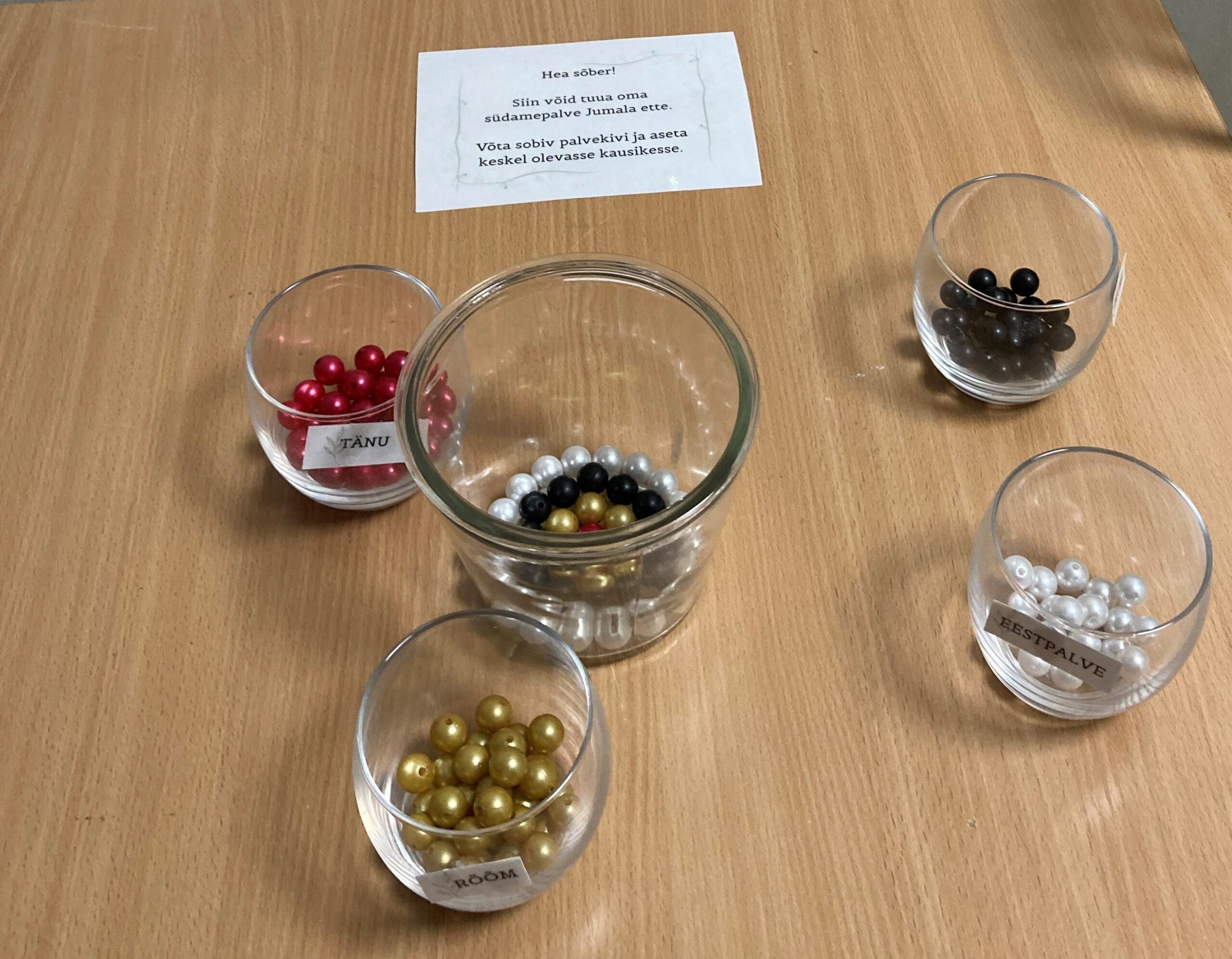
English teacher Kruusmets shows us around the school’s rooms. In one corridor stands a table with glass stones. The children are encouraged to say a prayer whenever something is on their minds and to place a stone in the bowl. Everything is bright, welcoming, and of a high standard, from the classrooms to the craft rooms in the basement. Yes, parents do have to pay school fees, confirms Maarja Kruusmets when asked. But there is also the possibility of receiving a scholarship.
Not all the children and young people at the school come from families with a Christian background. “Many appreciate the friendliness that prevails at the school, the freedom in how we interact with one another,” reports Deacon Holsting. Iko is in the upper school and can confirm this. Religion doesn’t really play a role in his family; he chose this school because some of his friends are here too. “I like the sense of community here. It’s a small school, almost like a family,” he says. And religion? Much of it is new to him, but also interesting. “I’m learning a lot.”
From this special place of learning in the centre of Tallinn, the tour continues to the premises of the Bethel congregation. There, from humble beginnings, a social centre for disadvantaged children and young people has been established. Alongside the day centre, which forms the core of the work, there is also a children’s home where children and young people can live as soon as they are ready to attend school every day. The work also includes experiential learning activities such as summer camps.
For Matti Sinisaar, who is guiding us through the centre, the Christian faith is the central motivation for everything he does. Time and again, the centre’s director weaves a relevant Bible verse into his presentation. He speaks movingly about the early days in the late 1990s. Volunteers from the parish began by providing food for street children who were living in inhumane conditions in the Koplin district of Tallinn. He tells the story of Marina and her brother, who lived in the sewers. Only Marina managed to accept help – her brother did not. He is no longer alive today. Marina now has children of her own and, on the website, thanks the Peeteli Centre for the support that changed her life.
The tour of the premises ends in the common room, where the large dining table stands. Eating together is a central part of the community, of which the Christian faith is naturally an integral part. Before the meal, a passage from the Bible is read – the children are allowed to choose the language themselves. And on the walls hang posters featuring the Lord’s Prayer – in Russian, Ukrainian, Estonian and English, amongst other languages. “Introducing the children to the Lord’s Prayer is precisely our aim,” explains Sinisaar.
He says that his many years of work at the centre have changed him too. The director explains that, shaped by Estonian history and the older generation’s accounts of the atrocities committed during the Russian occupation, he grew up harbouring a hatred of Russians. And he sees it as God’s plan that most of the children he has helped at the centre since then have, of all people, been Russian-speaking. “Do not be overcome by evil, but overcome evil with good,” he quotes from the Epistle to the Romans.